
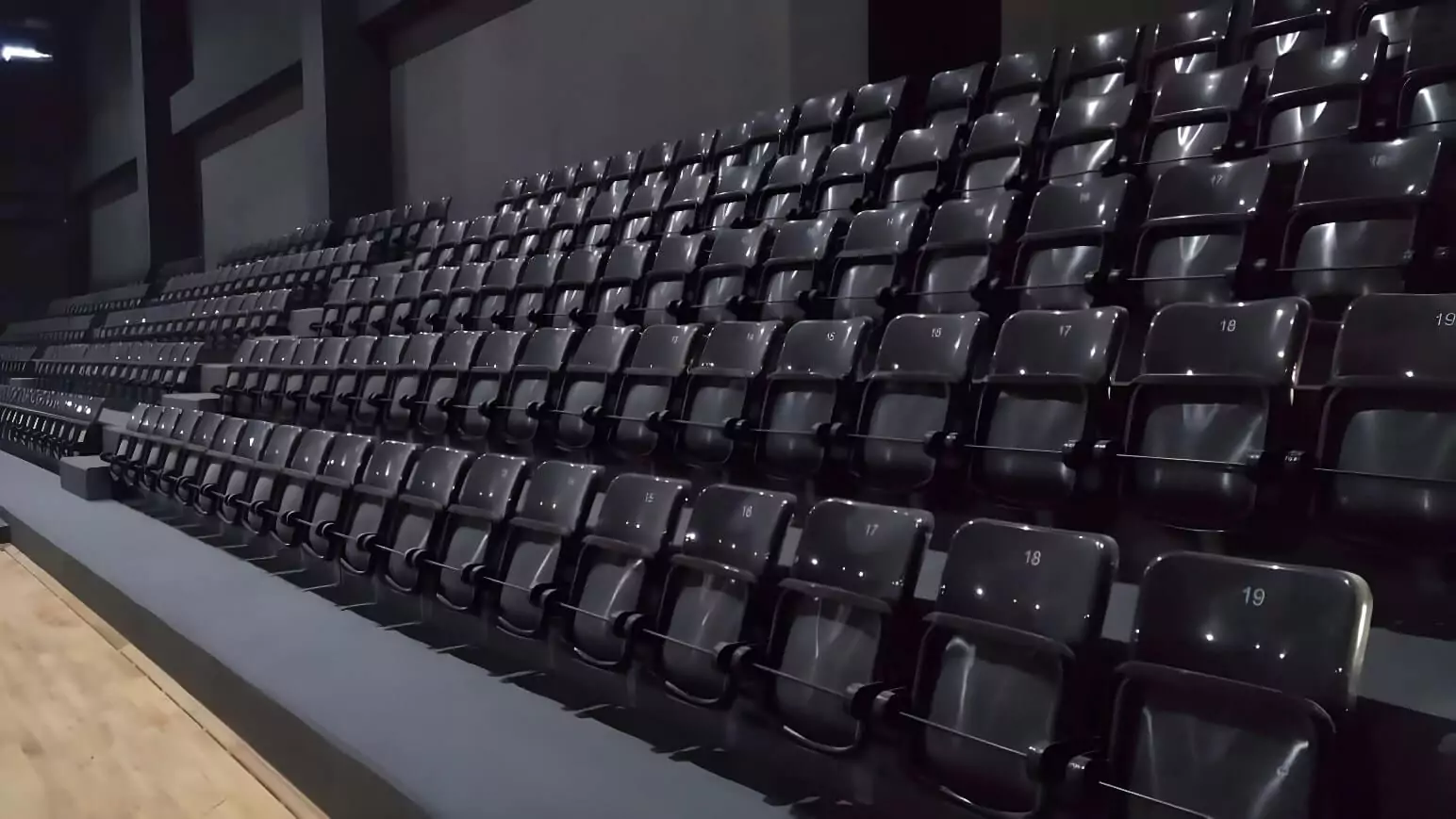
Seats Built for Arenas
A stadium seat is a small product when viewed alone, but in a sports venue it becomes part of a much larger system. Thousands of seats create the face of the tribune, organize the crowd, support ticketing, define sections, guide spectators and influence how the stadium is perceived even when it is empty. A well-built stadium can look unfinished if its seats are faded, loose, inconsistent or poorly installed.
For international projects, Turkey has become an important production base for stadium seating because it offers manufacturing flexibility, project experience and a strong balance between quality and price. Stadium projects often require large quantities, custom colors, UV-resistant materials, secure mounting, numbering, VIP areas, press zones and sometimes player bench or shelter systems. These needs cannot be solved properly by looking only at the cheapest unit price.
A professional stadium seat project should begin with the venue’s real conditions. Climate, tribune geometry, step depth, row spacing, expected crowd density, maintenance routine, cleaning method, color strategy and installation surface all affect the correct product choice. A seat that works well in a covered arena may not be suitable for an exposed football stadium. A municipal sports facility may need a different solution than a VIP stand in a premium venue.
Turkey as a Stadium Seating Production Base
Turkey has strong advantages for stadium seating projects because it combines manufacturing capacity with practical export experience. For projects in Europe, the Middle East, the Gulf region, Africa and nearby markets, Turkish production can offer competitive delivery, flexible customization and technical project support.
Stadium seating from Turkey can be suitable for new venues, renovation projects, municipal stadiums, club facilities, arenas, school sports areas and large international developments. The key is choosing a manufacturer that understands not only production, but also the realities of installation and long-term use.
A stadium seat should not be produced as a generic plastic item. It should be manufactured according to the expectations of public use, weather exposure and project-specific requirements.
The Stadium Seat as a Repeated Element
In stadiums, one seat becomes a pattern. A small weakness repeated 10,000 times becomes a large problem. A slight color inconsistency, weak fixing point, poor surface finish or uncomfortable form becomes visible across the whole venue.
This is why stadium seat manufacturing requires consistency. Every seat should match in color, shape, strength and finish. If the project includes different zones such as general spectator areas, VIP sections and press rows, these areas should be different in function but still coordinated in quality.
A good manufacturer protects the stadium’s visual order by controlling the details repeated across the tribune.
Climate Should Guide the Product
Stadium seats are exposed to different conditions depending on the region. A venue in a rainy climate has different needs from a stadium under strong sun. A coastal area may create different maintenance challenges than an inland sports facility. Hot regions require strong UV thinking. Cold regions may require attention to material behavior under temperature change.
For outdoor stadiums, plastic quality and UV resistance are critical. If the material is weak, the seats may fade, become brittle or lose their professional appearance. In large venues, replacing faded or damaged seats later can be expensive and operationally difficult.
The right stadium seat should be selected for the climate, not only for the catalogue image.
Tribune Geometry Comes First
Before choosing a stadium seat model, the tribune structure should be reviewed. Step depth, step height, row distance, aisle position, railing location and mounting surface all affect the correct seating choice.
A compact fixed seat may be suitable for limited step depths. A folding or tip-up model may require more careful row planning. VIP seats need wider spacing and stronger comfort planning. Press areas may need working desks and additional legroom.
If the tribune geometry is ignored, even a good product can create problems. The seat must fit the concrete, steel or precast structure correctly.
Fixed Stadium Seats for Efficient Venues
Fixed stadium seats are practical for large general spectator areas. They create clear seating positions, support capacity planning and offer a simple long-term solution when movement mechanisms are not required.
These seats are often used in football stadiums, municipal sports venues, school tribunes, training facilities and public stands. Their main strengths are simplicity, durability and easy maintenance.
For fixed seats, secure mounting is essential. The seat should be stable during use, easy to clean and resistant to repeated public contact. The mounting points should match the surface and installation method of the project.
Monoblock Seats for Public Tribunes
Monoblock stadium seats are strong options for projects that need simple, durable and cost-effective seating. Because they are generally produced as one-piece plastic forms, they can reduce maintenance complexity in high-use areas.
They are suitable for public sports facilities, smaller stadiums, schools, municipal venues and renovation projects where practical installation and long-term resistance matter. Their compact structure can help protect capacity.
However, monoblock does not mean low specification. Material quality, ergonomic shape, UV stability, surface finish and fixing strength still define the real value of the product.
Folding and Tip-Up Seats for Controlled Circulation
Folding and tip-up stadium seats are useful where row movement and comfort are important. When the seat pan rises, spectators can pass more easily and cleaning teams can access the floor more efficiently.
These models may be suitable for covered stands, arenas, premium spectator zones and modern football venues. They can make the tribune feel more organized, especially when the venue is empty.
The critical point is mechanism quality. A folding stadium seat should close smoothly, remain stable and avoid unnecessary noise. Weak mechanisms can create maintenance issues and reduce the perceived quality of the stand.
VIP Stadium Seating From Turkey
VIP stadium seats require a different design logic. They are not selected only for capacity. They are selected for comfort, prestige and commercial value. Protocol areas, hospitality zones, executive stands and premium ticket sections should feel clearly different from general spectator areas.
VIP stadium seating may include wider dimensions, armrests, cup holders, upholstered surfaces, padded backs, headrests or special colors. The correct configuration depends on whether the area is open, covered or fully protected.
For VIP areas, premium appearance must be supported by durability. A VIP seat that wears quickly or becomes unstable can damage the value of the entire section.
Press Tribune and Media Seating
Press areas need working comfort, not ordinary spectator seating. Journalists and media teams may sit for long periods while using laptops, notes, audio devices and technical equipment. The seating must coordinate with desks, power access and clear field visibility.
A professional press tribune should consider seat height, desk distance, legroom and technical infrastructure. These areas may represent a smaller quantity than general stands, but they are important for the operational quality of the venue.
For stadiums aiming to host important events, press seating should be treated as a technical zone, not as a normal spectator block.
Player Bench and Shelter Systems
A complete stadium project often includes more than tribune seats. Player bench seats, substitute areas and shelter systems are also part of the seating package. These areas are visible on broadcasts, photos and inside the venue, so they should look professional and organized.
Player seats may include headrests, upholstery, team colors or custom details. Shelter systems can protect substitutes and technical staff from rain, wind or sun while maintaining visibility toward the pitch.
These elements help complete the field-side environment and strengthen the professional image of the sports facility.
Color Planning for Stadium Identity
Seat color is one of the most powerful identity tools in a stadium. Club colors, national colors, section divisions, sponsor patterns or visual effects can all be created through seating layout.
But color planning must be realistic. The selected colors should remain stable as long as possible under real exposure. If different sections fade unevenly, the stadium begins to look old and poorly maintained. If replacement seats do not match earlier batches, visual consistency can be damaged.
A strong color strategy should combine design, UV performance and future replacement planning.
Numbering and Organized Ticketing
Seat numbering is essential in modern stadiums. It supports ticketing, spectator flow, staff guidance and event management. Without clear numbering, entry periods can become slower and more confusing.
Numbers may be applied on seat fronts, backrests, armrests or separate plates depending on the model. The method should be durable, readable and suitable for cleaning.
Good numbering connects physical seats with block signs, row letters and digital ticketing. This makes the stadium easier to operate during crowded events.
Renovation Projects With Existing Structures
Many stadium seat projects from Turkey involve renovation. Existing stadiums may have old seats, benches or damaged tribune areas that need to be upgraded without rebuilding the entire structure.
Renovation requires careful review. Existing mounting holes, concrete condition, step depth, row spacing and capacity targets should be checked before production. A new seat that does not fit the old structure can create delays or extra construction work.
A successful renovation improves the visual identity, comfort and safety of the venue while respecting the limitations of the existing tribune.
New Stadium Projects and Early Coordination
In new stadium projects, seating should be considered early. The seat type affects step design, row spacing, sightlines, VIP zoning, press areas, accessible seating and installation planning.
If seats are selected too late, the architecture may not fully support the preferred model. This can create unnecessary compromise. Early coordination helps protect capacity, comfort and long-term functionality.
A stadium seat is not a final accessory. It is part of the spectator experience from the first design decisions.
Mounting Quality and Installation Logic
A strong seat can perform poorly if it is installed incorrectly. Mounting method, bolt type, hole position, surface condition and alignment all matter. Concrete steps, steel structures and precast tribunes may require different fixing approaches.
Installation also affects appearance. Uneven rows, inconsistent spacing or weak alignment can make a new project look careless. In a stadium, visual repetition makes installation quality very visible.
Correct installation protects safety, comfort and the professional order of the tribune.
Maintenance in Real Stadium Conditions
Stadium seats face dust, food, drinks, shoes, weather, crowd movement and regular washing. Maintenance should therefore be part of product selection.
The seat form should be practical to clean. Water should not remain trapped unnecessarily. Surfaces should tolerate repeated cleaning. Numbering should remain readable. Moving parts, if used, should be accessible for inspection.
Maintenance-friendly seats reduce operational pressure and help the stadium keep a clean, organized appearance for longer.
Lifecycle Value Over Initial Price
The cheapest stadium seat is not always the most economical seat. If a low-cost product fades, cracks, loosens or needs early replacement, the real cost becomes higher. In large stadiums, even small problems multiply quickly.
Lifecycle value includes material durability, UV resistance, mounting reliability, cleaning practicality, replacement consistency and long-term appearance. A better-made seat can protect the investment by reducing future maintenance and replacement needs.
A strong price-quality balance is especially important for projects with thousands of seats.
Manufacturer-Based Customization
Working directly with a manufacturer allows project teams to control important details: model type, plastic color, UV requirements, numbering method, mounting style, packaging, special sections, VIP options and player bench systems.
This is useful for international projects where different parts of the venue may require different solutions. General stands, VIP areas, press rows and team zones can be planned separately while staying within one coordinated project.
Manufacturer-based supply helps create a stadium that looks unified and works practically.
Export and Project Coordination
For international customers, product quality must be supported by clear coordination. Packing, labeling, shipping organization, production timing and installation support can all affect project success.
Large seating projects should arrive on site in an organized way. If products are mixed, poorly labeled or packed without installation logic, the site process becomes slower. Phased deliveries may require even more attention.
A professional stadium seat supplier should understand that the project continues after production.
Stadium Seat Categories
Stadium seat projects from Turkey may include fixed stadium seats, monoblock plastic seats, folding seats, tip-up seats, UV-resistant seats, VIP stadium seats, hospitality seats, press tribune seats, player bench seats, dugout seats, shelter systems, arena seating and special renovation solutions.
Each category has a different role. The correct selection depends on climate, venue type, tribune geometry, capacity target, comfort level, maintenance routine and budget.
Conclusion
Stadium seating from Turkey can offer strong value for sports venue projects that need durability, customization, export capability and competitive production. The right manufacturer should understand not only how to produce seats, but how those seats will perform inside a real stadium.
A successful stadium seating project requires strong materials, UV resistance, correct tribune fit, secure mounting, clear numbering, practical cleaning, consistent colors and a balanced quality-price approach. When stadium seats are selected according to the real conditions of the venue, the result is a stronger, more organized and more professional sports facility.
For professional stadium seat solutions from Turkey, visit the official website.